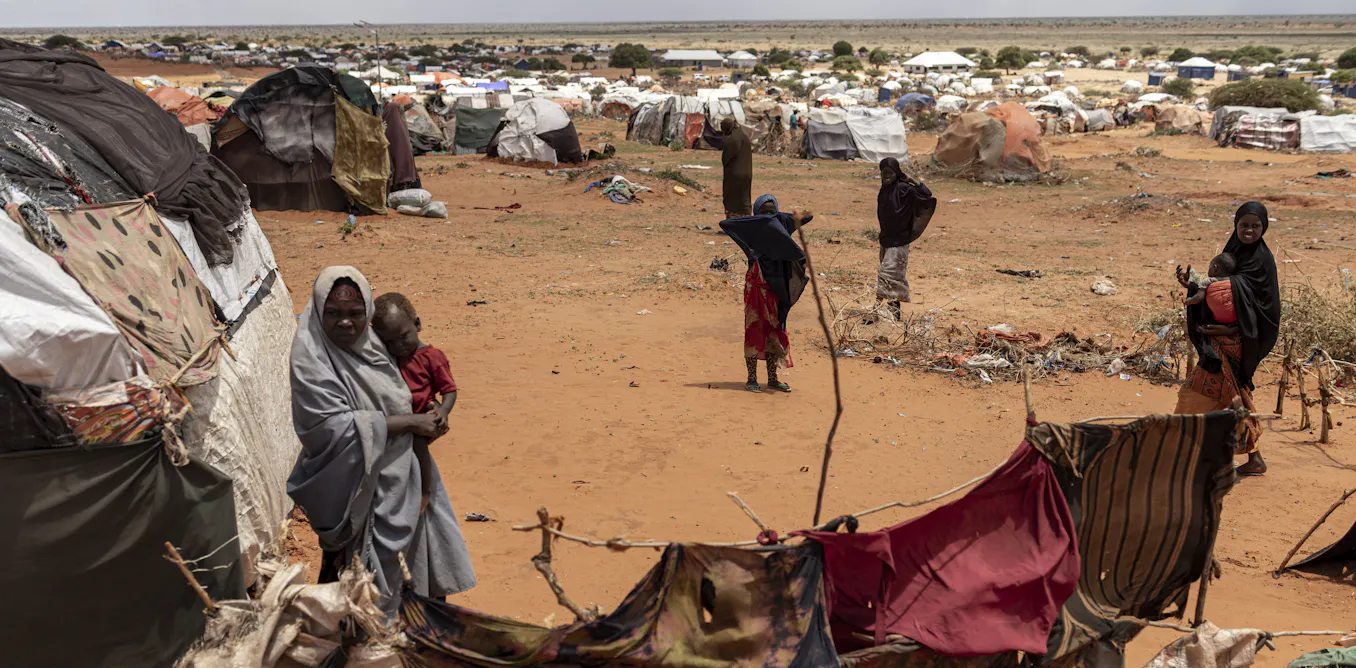
Communities across Africa are restoring mangroves, rangelands and urban green spaces while contending with mounting climate threats, and many increasingly make decisions based on climate information from governments, donors and researchers.
Whether that information actually matches what they need is the question at the centre of a new study drawing on interviews with 530 people involved in nature-based projects in Ghana, Kenya, Tanzania, Madagascar and South Africa.
The authors, writing for The Conversation, describe themselves as researchers specialising in ecosystem restoration and the links between people, their livelihoods and the environment. They say they study how nature-based solutions can help communities adapt to climate change.
Their survey covered people working in community groups, public administrations, NGOs, intergovernmental organisations, parastatal bodies, businesses and research organisations.
Some drew their livelihoods from the projects; others used them to cope with climate change, environmental degradation and threats to food and water supplies.
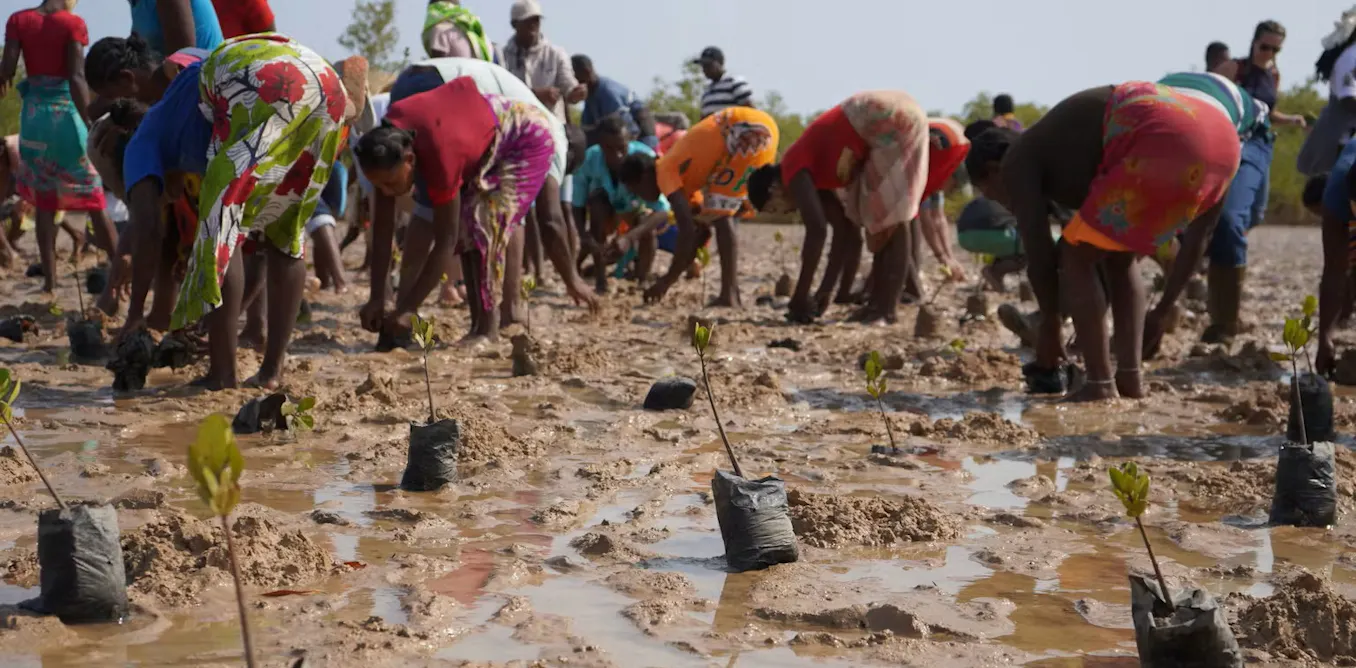
The work they described spanned protection and restoration of forests, mangroves, wetlands and rangelands, along with conservation agriculture, agroforestry, rotational grazing and urban greening.
Campaigns against overfishing and deforestation formed part of the picture, as did planting native trees, reseeding pastures, managing livestock numbers, sustainable beekeeping and removing non-native plants.
Two examples illustrate the range.
In the uMzimvubu basin in South Africa’s Eastern Cape province, small farmers graze sheep on communal land and belong to grazing associations taking part in nature-based programmes intended to support rural livelihoods; membership brings benefits including information on sustainable rangeland management.
In Madagascar, a community nursery grows mangrove seedlings for forest restoration.
The study examined what information these people receive about past, present and future climate conditions.
Participants were asked how they use that information in their work and what additional information would help them, and were asked to rank improvements to climate services and their expectations for new ones.
That exercise allowed the researchers to identify which existing services need upgrading and where new services are required.
The authors report that people wanted existing climate services improved and new services tailored to their communities.
Those services, in their account, should combine weather and seasonal forecasts with climate change projections, and should integrate information on land, water, livelihoods and local knowledge.
According to the researchers, asking people what climate information they need is not enough on its own.
Scientists, providers, users and holders of local and indigenous knowledge need time, resources and incentives to develop climate services together, they argue, and institutions and funders must recognise that bringing different kinds of people to work jointly matters as much as producing a finished “climate service”.
Ce que les gens utilisent déjà influence ce dont ils disent avoir besoin
The survey found that communities already use various types of climate information to make decisions, including forecasts of rainfall and temperature and alerts for heatwaves, floods and droughts.
In the five countries studied, the authors write, these climate services are delivered via mobile phones, websites, television and radio.
More than half of those interviewed wanted improved versions of the information they already use, which the authors say shows existing services should be upgraded to meet the needs of different communities and places.
More than 80 per cent said existing climate services had limitations. A principal problem identified was that indigenous and local knowledge used to forecast climate or make decisions was not integrated into official climate services.
In Turkana, Kenya, the authors note, traditional seers known as “Emuron” draw on indigenous practices to anticipate severe weather and other climate disasters, and elders send scouts to assess the state of pastures and water points before deciding where to move livestock.
Those practices, they write, are not linked to official climate services.
Respondents also said information was hard to access or arrived too late. Online services do not work well where people cannot afford mobile data bundles, where reception is unstable or where they do not have smartphones, according to the study.
Technical reports need simplifying or explaining in person by experts, and existing community networks and trusted local figures could receive information through official channels and pass it on more widely.
More than 60 per cent of respondents said knowledge about climate change needed strengthening, including understanding of climate change and its impacts, awareness of available services, and the skills to interpret and act on the information.
Les populations souhaitent de nouveaux services climatiques locaux leur permettant d’agir
Climate services often tell people how much rain to expect or what temperature is forecast, the authors observe, but that does not explain what those forecasts mean for the land, water or other natural resources they manage.
Participants wanted such information combined with data on river flow, soil moisture, vegetation and fire risk.
One person managing rangelands, for instance, wanted to know how rainfall and soil moisture would affect available forage – the grass and other plants livestock feed on.
People also wanted forecasts and climate projections linked to local social, health and economic information, including how rainfall might affect animal health, livestock disease and the movement of people and animals.
They wanted information about their own community, neighbourhood or municipality rather than broad regional alerts, including identifying the places most exposed to flood risk and the steps residents should take.
Respondents said they wanted more climate information on their mobile phones, on community radio and through organised community networks, social media and messaging apps.
They specified that these channels should work together so that people able to access and understand the information can share it with others. They also wanted more illustrations, animations and videos alongside figures and written explanations.
Communities were already using services devoted to heatwaves, droughts and floods, but said those needed improvement. They also identified opportunities for new services issuing alerts and information on extreme heat and cold waves, erosion, landslides, wind and fires.
Nine in ten respondents (91 per cent) said new climate services should incorporate indigenous and local knowledge, including forecasting methods. In Turkana, residents suggested that diviners meet scientists to explain local forecasting methods and develop new services jointly.
Others stressed the importance of local terms and languages, which the authors say requires continuous cooperation between holders of local knowledge, scientists and climate service providers rather than a few one-off meetings.
The innovation respondents wanted, the authors write, was not simply more technical products but better ways of bringing together different kinds of knowledge, actors and technologies.
Prochaines étapes
The authors conclude that producing useful climate information goes beyond asking people what they need.
Scientists, climate information providers, local users and holders of indigenous knowledge need time and support to meet regularly, share knowledge and develop that information together, they write.
Governments and funders should finance this work, not only the final forecasts, maps or tools, according to the authors.
They suggest governments and development funders could cover costs such as travel, community meetings, translation, training and ongoing cooperation, particularly where local organisations cannot afford them.
That, they write, would help ensure climate information reflects local knowledge and helps communities make practical decisions.
The article carries a disclosure that Petra Holden, Cherié Janine Forbes and Gerald Ngoma receive funding from the ALBATROSS project, financed by the European Union under grant agreement No 101137895, and that Martine Visser’s research time is supported in part by the National Research Foundation of South Africa (UID: 148866).
Source: The Conversation
“,
“excerpt”: “Researchers surveyed 530 people involved in nature-based projects across Ghana, Kenya, Tanzania, Madagascar and South Africa about the climate information they receive and what they still need. Most said existing services fall short, and 91 per cent want indigenous and local knowledge built into new ones. The authors argue that funding should cover the joint work of producing climate services, not just the final forecasts and tools.”
}