
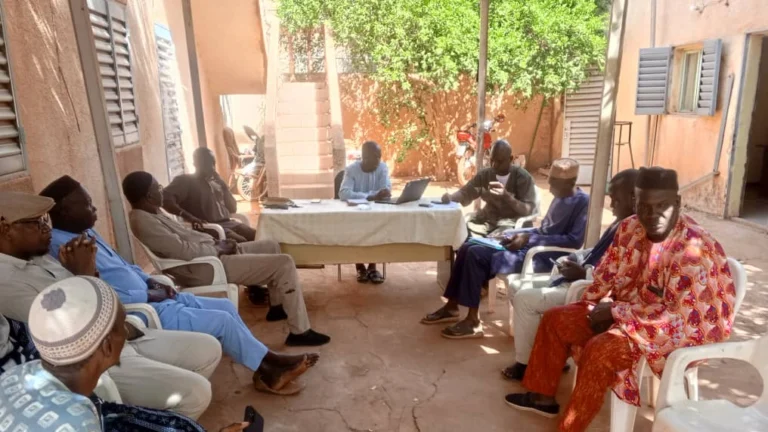
Mali’s training system produces far more young jobseekers than the public sector can absorb, a gap dominating discussion at the 26th Bamako Forum, where panel four examined education, employment and entrepreneurship.
Speaking as a guest witness, Sidi Danioko, vice-president of the Patronat du Mali, put the annual number of young people entering the labour market at 200,000 to 300,000, against 20,000 to 30,000 recruitments in the civil service.
He also pointed to the weight of the informal sector, which he said accounts for nearly 80% of activity and jobs.
Danioko called for training oriented more closely towards the needs of businesses, naming digital technology, artificial intelligence and robotics as priority areas.

In a report from AMAP, the panel’s speakers advocated developing apprenticeships, strengthening vocational training and building closer collaboration between training institutions and businesses.
Madi Yassa Goundiam, pedagogical director of the Centre des métiers, focused on the quality of trainers, arguing that mastery of a discipline must be accompanied by teaching skills and a commitment to the educational community.
Adama Ouane, an expert in education for sustainable development who moderated the panel, defended a holistic approach to learning that combines school, culture and values.
He cited dual training and the validation of prior learning, and deplored the compartmentalisation of educational reforms.
Amadou Bamba, technical adviser at the Ministry of National Entrepreneurship, Employment and Vocational Training, gave the ministry’s figures for 2024: an informal employment rate of 95.9% and a composite underutilisation of labour of 16.8%.
Source: amap

Comments