
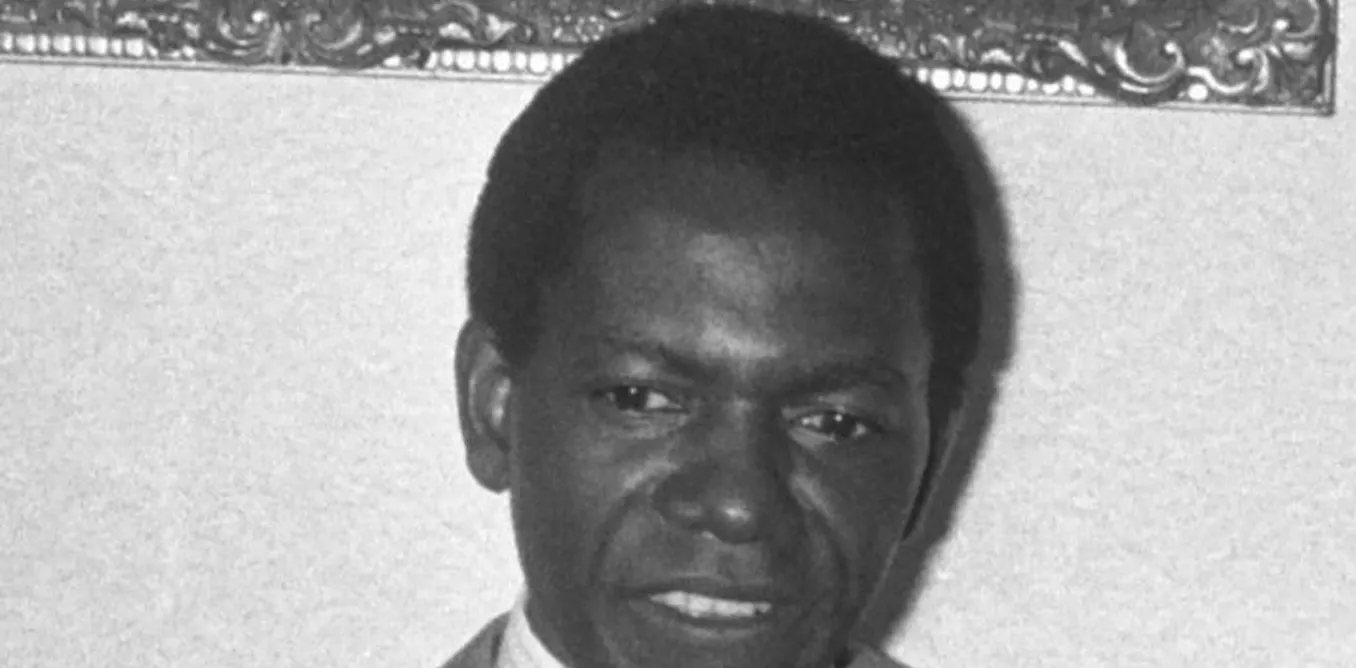
Fabien Eboussi Boulaga spent his career on a question that has not aged: from where can an African intellectual speak without becoming the mouthpiece of a power, an ideology or a fixed identity?
The Cameroonian philosopher, born in 1934 and dead in 2018, remains less familiar to general readers than Valentin Yves Mudimbe or Achille Mbembe, yet his work holds a central place in contemporary African intellectual history.
Premat’s account traces how Eboussi Boulaga’s biography gave that question its weight. Born in Bafia, in Cameroon, he entered the Society of Jesus in 1955 and was ordained a priest in 1969.
His religious formation gradually became the ground of a critical inquiry into the links between Christianisation, colonial domination and African cultures.
In 1980 he left the Society of Jesus and sought a return to the lay state, after years of critical reflection on Christianity and its presence in Africa.
For Premat, those questions reached well beyond one man’s itinerary. They concern how an African subject can constitute himself as the subject of his own thought when many of the categories used to describe him were elaborated elsewhere.
Premat writes as a researcher in francophone cultural studies who has worked for several years on African intellectual voices and the conditions under which they build their own spaces of thought.
With Buata Malela, a specialist in French and francophone literatures and postcolonial studies, he published Sensibilités intellectuelles africaines. Du discours occidental aux voix africaines (1988-2022) in 2025.
The book examines how African intellectuals elaborate a critical thought confronted at once with colonial legacies, power relations and contemporary transformations in the production of knowledge.
Sortir de la quête de l’authenticité
Published in 1977, La Crise du Muntu. Authenticité africaine et philosophie marks what Premat calls an essential moment in that body of work. The term “Muntu”, present in several Bantu languages, refers to the person or the human being.
In Eboussi Boulaga’s usage, the crisis of the Muntu designates something deeper: the situation of an African subject confronted with a history in which he was long defined and interpreted by others.
Part of the African thought developed in the context of decolonisation had sought to answer that situation by recovering an authenticity that colonisation was said to have covered over or destroyed.
Premat treats the approach as historically understandable, since the aim was to rehabilitate cultures and societies long described as inferior. Eboussi Boulaga nonetheless perceived its limits.
The search for an original African essence can become a new way of enclosing the African subject, this time inside an identity assumed to be immutable.
The decisive question, then, is no longer how to recover an intact Africa that would have preceded colonisation.
It is how individuals and societies can build their future from a history that includes African heritages as well as colonial violence, imported religions, independence and the transformations of the contemporary world.
That position, Premat argues, explains the critical interest Eboussi Boulaga took in one of the most controversial texts in the history of African philosophy, Placide Tempels’s La Philosophie bantoue, published in 1945.
Read more: Valentin-Yves Mudimbe, le penseur qui a théorisé la décolonisation des savoirs africains
Qui a le droit de définir la pensée africaine ?
The Belgian missionary Placide Tempels set out to show that Bantu populations possessed a coherent conception of the world, organised in particular around the notion of vital force.
In the colonial context, when many European thinkers had denied African societies the capacity to produce philosophical thought, the undertaking could look like recognition. Eboussi Boulaga exposed a deeper difficulty.
The Bantu described by Tempels remains an object of knowledge whose thought is reconstructed by an outside observer. He is described, classified and interpreted, while his own speech struggles to become the place from which knowledge is produced.
In L’Affaire de la philosophie africaine, published in 2011, Eboussi Boulaga returned at length to the question and showed how far the construction of a Bantu difference can remain bound up with the colonial apparatus.
The problem therefore exceeds whether or not an African philosophy exists. It concerns the conditions under which a society becomes an object of knowledge, and the power relations that determine who holds the authority to define it.
Premat links the inquiry to contemporary debates on the decolonisation of knowledge, while noting that Eboussi Boulaga was wary of any answer that would substitute a new orthodoxy for the old one.
Le danger de « l’intellectuel exotique »
The reflection takes on particular force in “L’intellectuel exotique”, an article published in 1993 in the journal Politique africaine.
There Eboussi Boulaga interrogated the paradoxical position of the African intellectual, often trained in institutions inherited from colonisation and using intellectual categories largely shaped in Europe.
The phrase “exotic intellectual” designates a situation in which the intellectual reproduces the very mechanisms he seeks to escape.
He may multiply discourses on Africa, its history or its identity while remaining dependent on the frameworks that determine what can be recognised as legitimate knowledge.
Eboussi Boulaga did not, however, advocate breaking with all thought coming from Europe, since that would amount to defining oneself in relation to it once again.
Intellectual freedom, in his account, supposes the ability to receive, transform and contest the available heritages. That demand did not stay confined to the realm of ideas.
It led him to examine the concrete forms of political life and the capacity of African societies to decide their own future, an interest that runs through his work on the continent’s political transformations.
In Les Conférences nationales en Afrique noire. Une affaire à suivre, published by Karthala in 2009, he analysed the democratic transitions under way in several African countries from the 1990s and considered the conditions that allow societies to become actors in their own history.
Une pensée pour les débats d’aujourd’hui
More than thirty years after “L’intellectuel exotique”, Premat writes, the questions Eboussi Boulaga posed remain current, in a context marked by the growth of an African academic diaspora and by debates on the decolonisation of knowledge.
For Eboussi Boulaga, freeing oneself from intellectual domination consisted neither in recovering an original identity nor in replacing European references with African ones. Critical thought must also interrogate the categories mobilised in the name of emancipation.
Premat locates the currency of his thinking in that demand for vigilance.
The African intellectual, on this account, has no need to choose between Africa and the West, tradition and modernity, belonging and the universal.
His responsibility is to preserve his freedom of judgement in the face of powers, institutions and discourses that seek to fix the limits of the thinkable.
To reread Fabien Eboussi Boulaga, Premat concludes, is to defend an intellectual life in which African subjects think of themselves as producers of knowledge, capable of interrogating their history, their heritages and their future.
Source: The Conversation
Comments