
Skip to content

West Africa News Agency

Agence de Presse Ouest-Africaine

Search news

Type to search stories, topics and pages.

Headlines

Author: Kabir Isa

Uncategorized

US Strikes Iranian Military Targets for Eighth Consecutive Night, CENTCOM Says

By Kabir Isa

The U.S. has escalated military operations against Iran into a sustained, eighth consecutive night of strikes, targeting not only strategic military infrastructure like coastal surveillance, air defense, and missile storage but also specifically retaliating against Iran’s Islamic Revolutionary Guard Corps for an attack on U.S. personnel in Jordan. This marks a shift from isolated retaliatory strikes to a continuous campaign aimed at systematically degrading Iran’s military capabilities. The CENTCOM’s explicit declaration that U.S. forces remain on "maximum alert" and "fully operational" signals a posture of indefinite readiness for further escalation. The core takeaway is that the U.S. has moved from reactive deterrence to proactive, sustained attrition warfare against Iran, with no indication of de-escalation.
Uncategorized

US State Department Issues Updated Travel Advisory, Flags 23 Nations at Highest Risk Level

By Kabir Isa

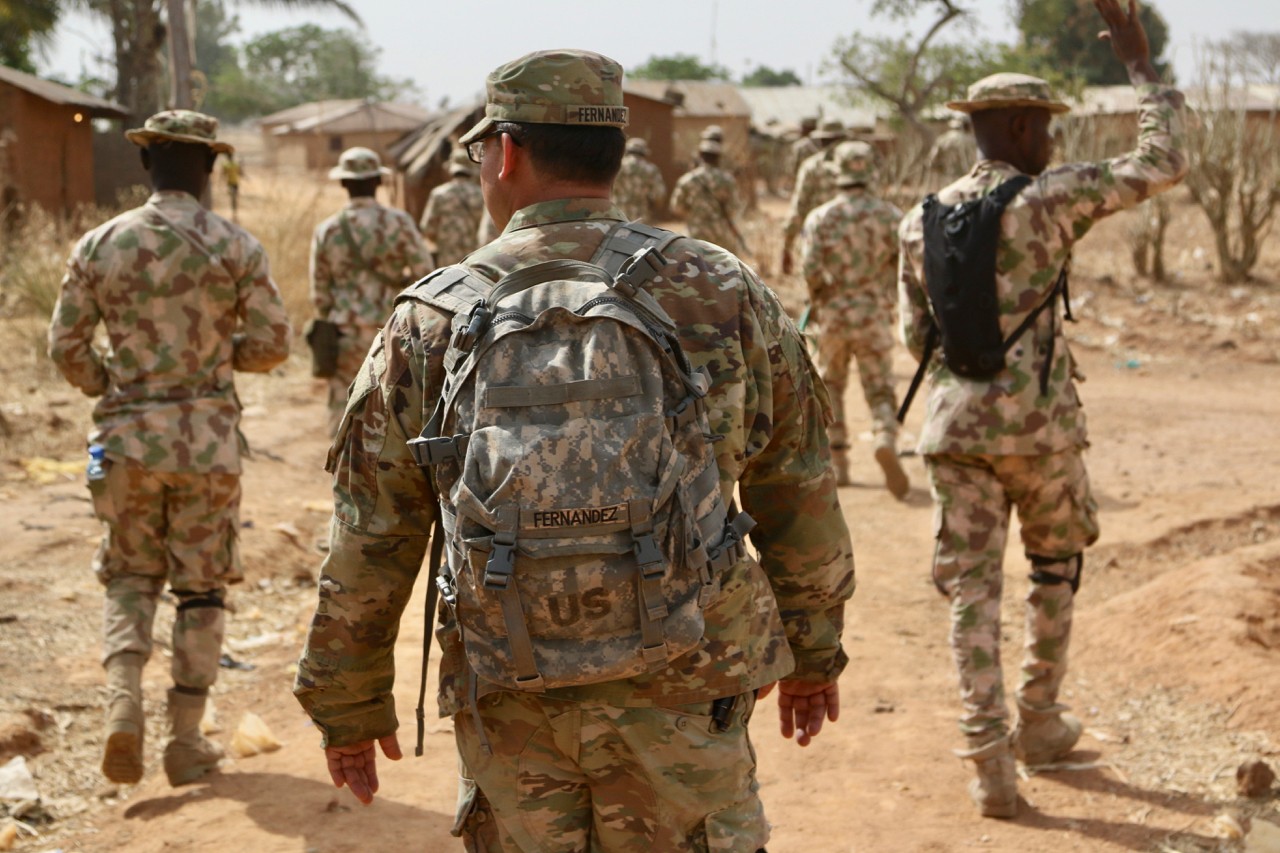
The U.S. State Department has elevated 23 countries to its highest "Level 4: Do Not Travel" advisory, citing armed conflict, violent crime, and limited U.S. emergency assistance capacity, with the list spanning Afghanistan, Russia, Haiti, North Korea, and 11 African nations. While Nigeria remains at Level 3 nationally, the advisory specifically flags 23 of its states—including Borno, Kaduna, and parts of the Southeast—as Level 4 zones due to terrorism, banditry, and civil unrest, creating a critical distinction between national and subnational risk. The key practical takeaway is that travelers and businesses cannot rely on a country’s overall advisory level; they must scrutinize regional breakdowns, as high-risk pockets exist even within nations deemed safer. Nigeria’s government downplays the warning as routine, but the granular detail underscores that security threats are highly localized, making location-specific intelligence essential for any travel or operational decision.

Uncategorized

U.S. Service Members Killed in Jordan Attack as Iran Conflict Intensifies

By Kabir Isa

The escalating U.S.-Iran conflict has now resulted in 16 American deaths and over 430 wounded, with the latest attack killing two service members and leaving one missing in Jordan. Iran has responded by suspending its interim agreement commitments and issuing fresh threats, while the U.S. has intensified operations with seven consecutive nights of strikes against Iranian military targets. The core takeaway is that this is no longer a series of isolated incidents but a sustained, high-casualty confrontation with no de-escalation in sight. The unique insight is that the human cost is accelerating rapidly, yet both sides are doubling down on military action rather than pursuing diplomatic off-ramps.

Uncategorized

China’s Kimi K3 and the Shifting Economics of the Global AI Race

By Kabir Isa

The global AI race has entered a decisive new phase where China’s strategy of producing high-performing, open-weight, and low-cost models like Kimi K3 directly challenges the US’s dominance in expensive, proprietary frontier AI. This shift fundamentally alters the economics of the industry, moving competition away from building the largest models toward creating superior applications, trusted services, and integrated ecosystems. Crucially, US export controls on advanced semiconductors have paradoxically accelerated China’s drive for technological self-reliance, forcing its researchers to become more efficient and innovative with constrained resources. The ultimate prize is no longer just a technological lead, but the power to shape the global AI ecosystem—and with it, the future of the global economy, national security, and every major industry.

Uncategorized

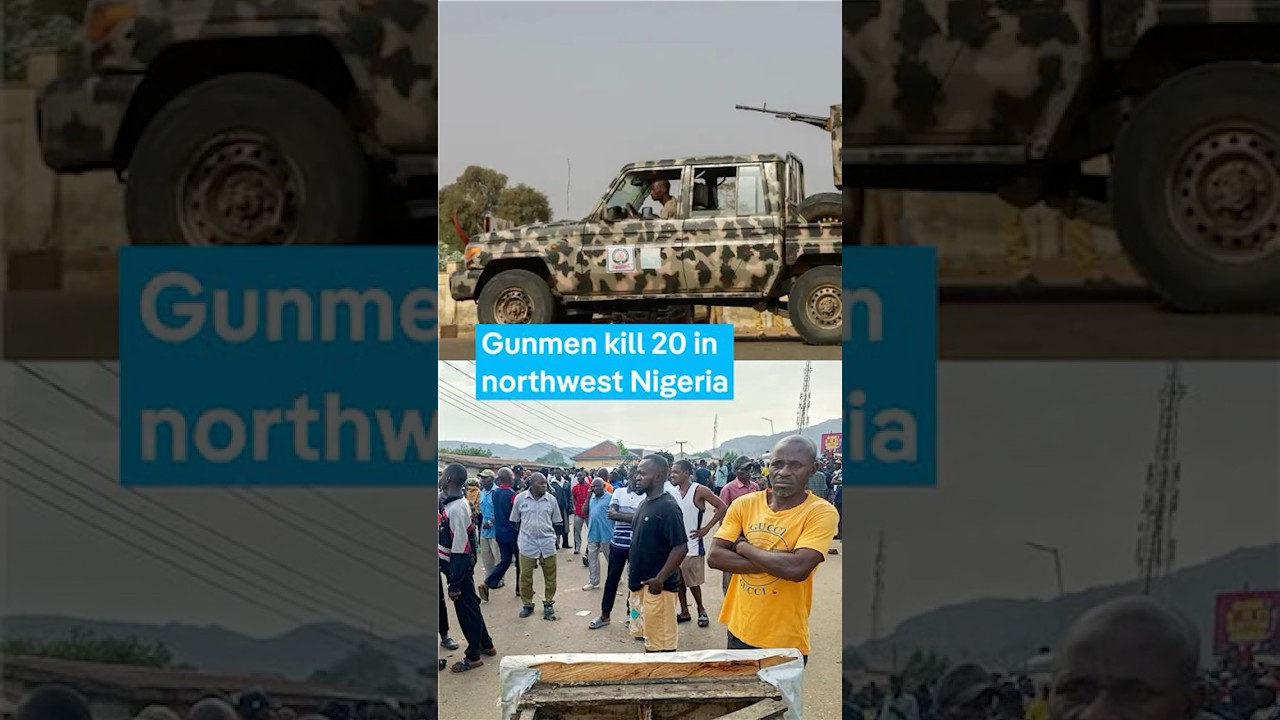
Nigeria’s Top News: School Kidnap Trial, Judge Housing Dispute, and Asset Forfeiture Rulings

By Kabir Isa

Nigeria’s current news cycle reveals a nation caught between systemic corruption and performative governance, where the government prosecutes kidnappers while simultaneously facing legal threats over luxury housing for judges and appeals against asset forfeitures. The core value proposition is that Nigeria’s persistent poverty is not due to a lack of resources but a failure to harness them, a claim starkly contradicted by the ongoing legal battles over stolen properties and the use of old footage to fabricate security successes. The unique insight is that the country’s leadership is actively undermining its own stated goals, as seen in the Supreme Court restoring forfeiture of a central bank governor’s assets while a former attorney general fights to keep 48 properties. The practical takeaway is that until the judiciary and executive consistently enforce accountability—rather than rewarding or protecting the elite—Nigeria will remain poor despite its potential.

Uncategorized

Supreme Court Upholds Final Forfeiture of $2.045 Million, Seven Properties Linked to Ex-CBN Governor Emefiele

By Kabir Isa

The Supreme Court of Nigeria has definitively upheld the final forfeiture of over $2 million and seven prime real estate assets—including multiple high-value properties in Lagos and an industrial complex in Delta State—from former Central Bank Governor Godwin Emefiele, ruling them proceeds of unlawful activity. This landmark judgment overturns a Court of Appeal decision that had ordered a retrial, establishing that the lower court erred in nullifying the original forfeiture order granted under the Advance Fee Fraud Act. The practical takeaway is that the EFCC’s strategic use of civil forfeiture proceedings, which require a lower burden of proof than criminal conviction, has been validated as an effective and irreversible tool for asset recovery against high-profile public officials. The core insight is that Nigeria’s apex court has signaled a zero-tolerance stance on corruption by prioritizing the swift return of illicit assets to the state over procedural delays, setting a powerful precedent for future anti-corruption enforcement.

Uncategorized

Court Upholds INEC’s Recognition of Abdulrahman Mohammed-Led PDP National Working Committee

By Kabir Isa

The Federal High Court has decisively dismissed a suit by PDP Board of Trustees members seeking to compel INEC to recognize the Kabir Tanimu Turaki-led interim leadership, thereby solidifying the legal standing of the Abdulrahman Mohammed and Senator Samuel Anyanwu-led National Working Committee. The court struck out the PDP as a plaintiff, ruling the suit was unauthorized by the party, and granted rival faction members the right to join proceedings, effectively validating INEC’s current recognition of the Wike-backed leadership. This judgment ends a major round of the PDP’s leadership litigation at the Federal High Court, leaving the Abdulrahman Mohammed-led NWC firmly in control and recognized by INEC ahead of the 2027 general election. The core takeaway is that the court has rejected the BoT’s claim to interim authority following the Supreme Court’s nullification of the 2025 convention, reinforcing that INEC’s recognition of the existing NWC is legally unassailable for now.

Uncategorized

Podcasting’s Audio Core, UK Listener Trends, and Spotify Video Revenue Tensions

By Kabir Isa

Despite the industry's push toward video, audio remains the bedrock of podcasting, with 90% of monthly consumers still choosing to listen and radio commanding over three times the ad-supported audio share. The UK market is thriving but top-heavy, as the top 10 shows capture a third of weekly listeners, while British audiences show clear disapproval of AI hosts. A major tension is emerging around Spotify’s video strategy: one prominent podcaster pulled his video content citing poor reliability, even as another production company reveals that Spotify’s video partner program was briefly their #1 revenue source. The core takeaway is that while video offers lucrative short-term revenue, the long-term health of the medium depends on maintaining audio-first quality and platform trust.

Uncategorized

‘God of War’ Series Recasts Kratos After On-Set Injury to Ryan Hurst

By Kabir Isa

The God of War series faces a major production setback as Ryan Hurst has been recast as Kratos due to a torn bicep sustained on set, forcing Sony and Amazon to pivot mid-production. This injury-driven recasting underscores the high physical demands and inherent risks of adapting video game action for live-action, where even a single actor’s injury can derail a flagship project. The key takeaway is that studios must now prioritize contingency casting and stunt safety protocols to protect billion-dollar IPs from such disruptions. Ultimately, this incident reveals that the biggest battle for the God of War series isn’t on screen, but in the unforgiving logistics of bringing a god to life.

Uncategorized

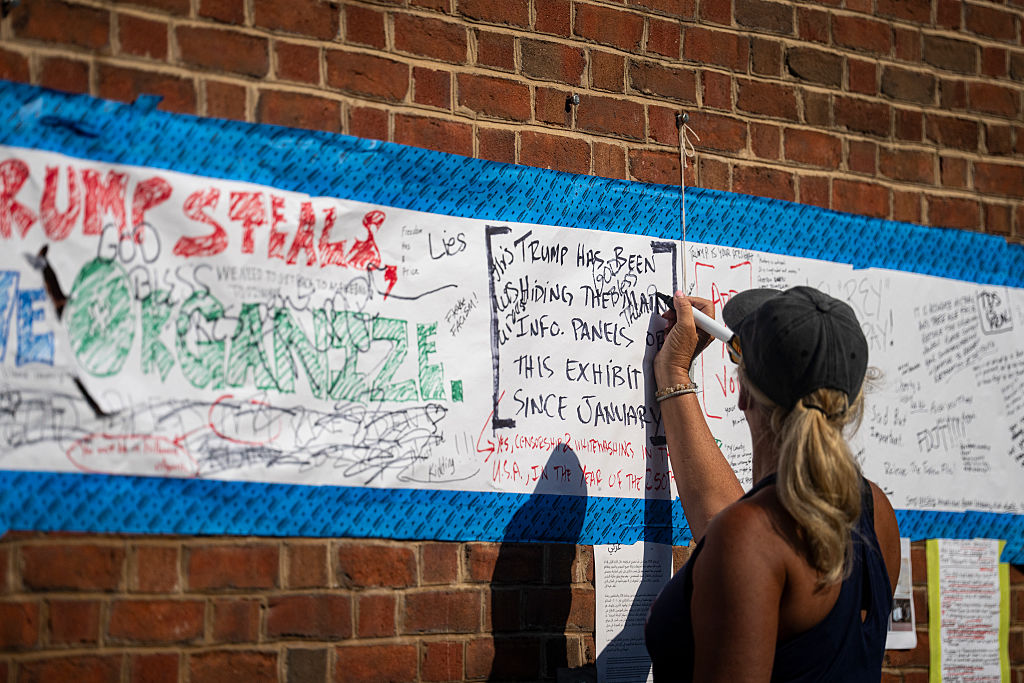
Federal Appeals Court Allows Trump Administration to Replace Philadelphia Slavery Exhibit

By Kabir Isa

Philadelphia’s cancellation of its July 4th parade due to extreme heat is not an isolated weather event but a stark, real-world preview of how climate change will force the abandonment of cherished national traditions, directly undermining the celebratory narrative of America’s 250th anniversary. The core insight is that the most immediate threat to national unity and public commemoration is no longer political division alone, but the physical impossibility of gathering safely in a rapidly warming climate. The practical takeaway for event planners and civic leaders is that heat resilience must now be a primary logistical requirement, not an afterthought, for any large-scale outdoor event. The unique conclusion is that the nation’s birthday is being stolen not by any political actor, but by the unyielding reality of a changing planet, forcing a painful choice between public health and patriotic ritual.