
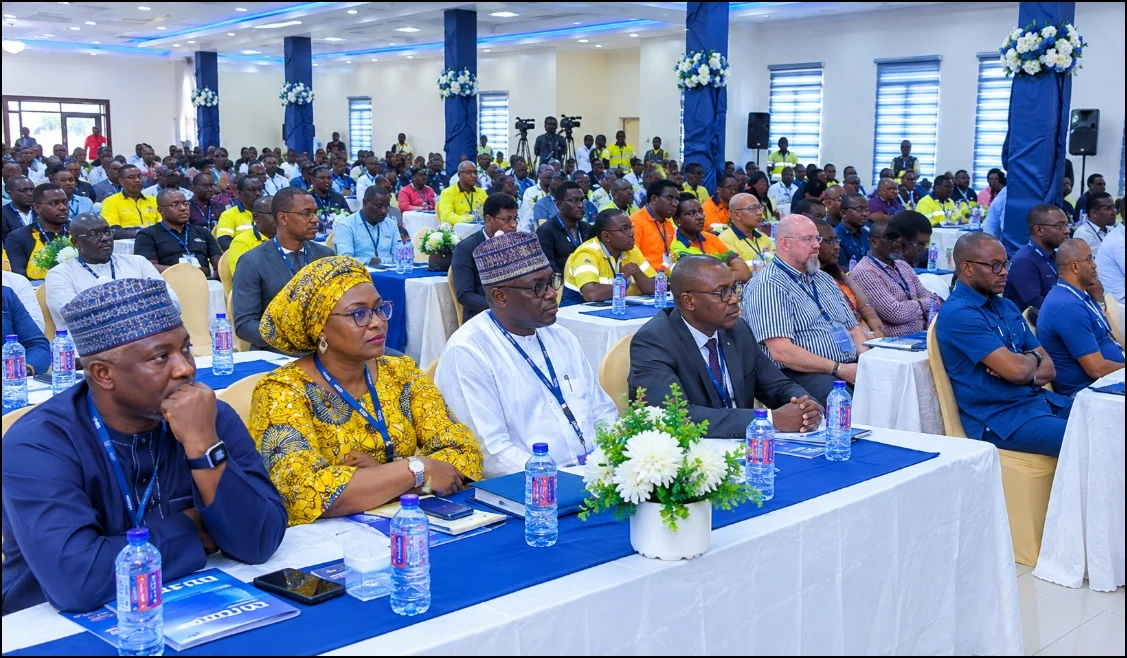
Gold Fields Ghana Limited has traded about $4.26 billion in the country since 2000, its supply chain manager said at a suppliers’ conference in Tarkwa, pressing the case for building local businesses that can survive the end of a mining contract.
Joshua Dankor, Manager of Supply Chain at GFGL, told the third Gold Fields Suppliers Conference at the Abosso Clubhouse that the goal is to develop skills that outlast the mine’s demand.
“It is important to build on the skills that we have and ensure that, for instance, the leader at Barbabedema mine market is also able to build on a space that when the Mine is no more or a single contract is ended, the person is able to move and serve other people and sustain themselves,” he said.
He named WTS as one local company the mine had mobilised to provide transport services. “From nothing, they have been able to multiply their capability, and now there are seven other suppliers.
That is what we need,” Dankor said.
He also cited Zen Petroleum, which he said began small with the mine and is now listed on the Ghana Stock Exchange.
“If you look at Zen Petroleum, we started with them when they were newborn, but today we can see Zen Petroleum even listed on the Ghana stock exchange.
That is what we mean, and we want to do more of that,” he said.
On women’s participation, Dankor said the records remained low and called for deliberate efforts to bring women into the mining industry. “Most especially, we want to be intentional about the involvement and participation of women in the mining industry.
The records are low. We are encouraging a lot of women to come and partner with us,” he said.
He appealed to financial institutions to back women-led businesses, saying the company could provide a platform but needed partners able to supply financing that understands the business.
Dankor also argued that young and emerging suppliers, particularly female-led firms, should have been given tax holidays.
“For me, taxation was good and helped build the economy, but the government could have given some tax holidays to young and up-and-coming suppliers, especially female-led businesses,” he suggested.
He said such companies would be competing with larger firms already in the market that have greater financial strength.
“If the government is intentional about it and gives them some tax holidays, I believe it will go a long way to help them,” he said.
Professor Barnard Bumi Bentsi, Vice Chancellor of the University of Mines and Technology in Tarkwa, said the true value of a partnership between mining companies and local suppliers should not be measured only by contracts awarded or money spent, but by the skills, knowledge, capacity and business opportunities that remain after a contract ends.
The two-day conference, held under the theme “Partnership for Enduring Value: Building Resilient Supply Chains Beyond Mining,” brought together more than 300 local and international suppliers. Topics discussed included ways to strengthen supply chain resilience, local procurement and suppliers’ development.
Comments